
Microsoft AI Innovation Challenge
A four-week programme turning frontline friction into a prioritised pipeline of AI opportunities. For CEOs, COOs, and digital transformation leaders.
What You Get
Frontline-Rooted Ideas
AI opportunities grounded in real frontline friction, not boardroom theory.
Momentum and Engagement
Cross-functional teams energised by solving real problems. Tangible, visible progress.
A Credible Pipeline
Ranked opportunities with business cases and implementation readiness.
Why Innovation Initiatives Fail
Most AI initiatives start top-down: executives identify opportunities in the abstract, teams struggle to execute, and impact disappoints.
The friction points—the real problems your teams face daily—stay hidden. Without frontline input, you miss the highest-impact opportunities and lose team buy-in.
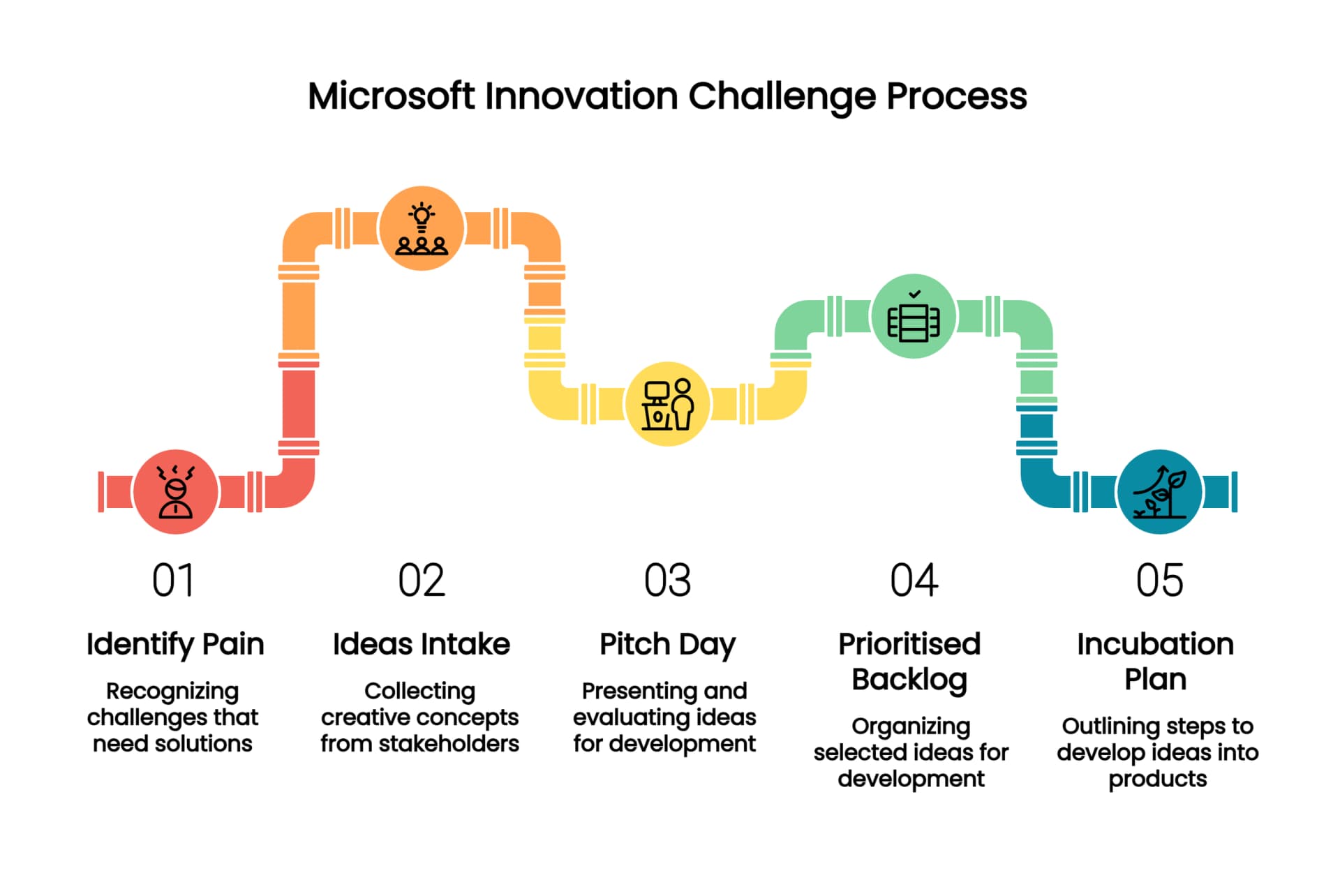
What Is the Challenge
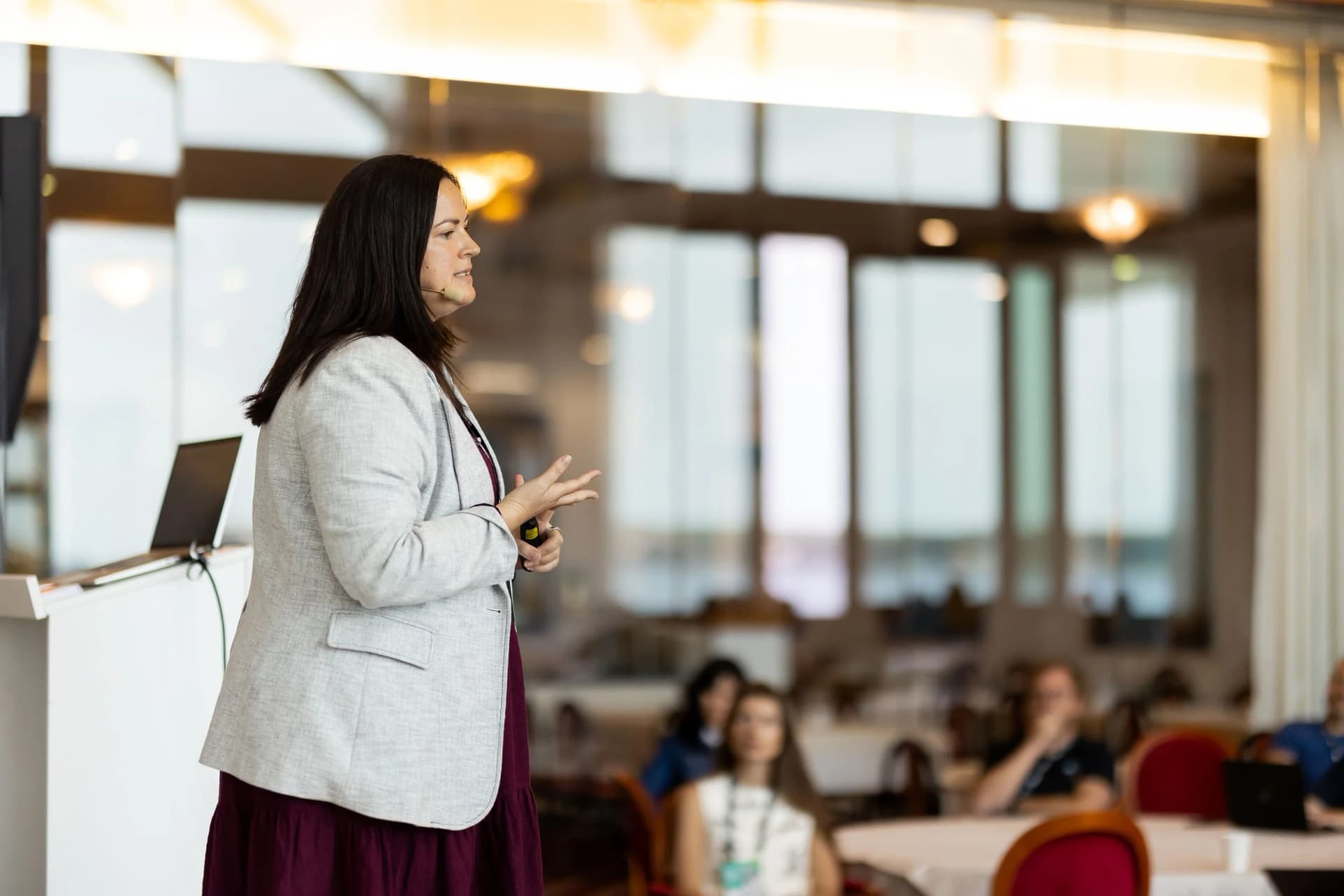
A four-week structured sprint where cross-functional teams identify, validate, and pitch AI ideas to solve real frontline problems.
Teams work through a defined process: listen to frontline friction, ideate AI solutions, develop business cases, and present their ideas in a final pitch day.
The output is a ranked pipeline of opportunities, each with clear business case, resource estimate, and implementation readiness score.
Who It Is For
CEO or MD
Identifying high-impact opportunities. Building momentum for transformation.
COO
Optimising operations and efficiency. Solving frontline pain points.
Digital Transformation Lead
Building a credible AI and transformation pipeline.
What You Receive

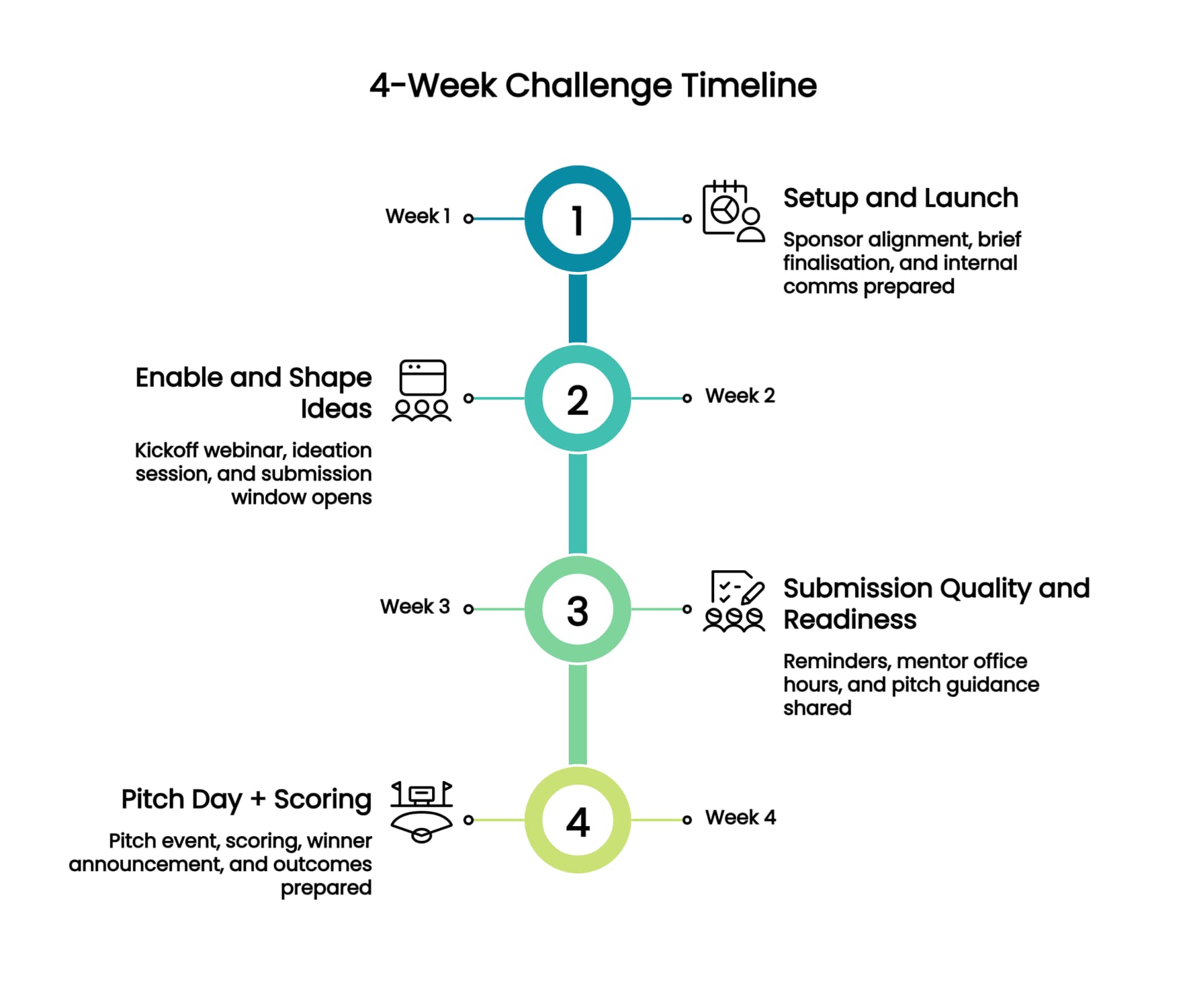
How the 4-Week Challenge Runs
Week 1: Frontline Listening
We conduct structured listening sessions with frontline teams across departments. Where does work hurt? What consumes time? What decisions are hard? We synthesise findings and share context with team leads.
Week 2: Team Ideation and Development
Cross-functional teams (8–12 per team) work through an ideation sprint. Teams get frontline insights, brainstorm AI solutions, develop business cases, and identify resource needs.
Week 3: Refinement and Business Case Development
Teams refine pitches, develop detailed business cases (cost, benefit, risk, timeline), and practise presentations. We coach on messaging and credibility.
Week 4: Pitch Day and Pipeline Delivery
Teams present to your exec team. We score and rank opportunities. You walk away with a prioritised pipeline and clear next steps.
How Ideas Are Prioritised
We use a consistent scoring framework across all ideas:
People Impacted
How many people benefit? How much friction does this solve?
Time and Efficiency Saved
Quantified hours saved per person per period.
Feasibility
Technical complexity, data availability, integration effort.
Cost and ROI
Implementation cost and payback period.
Risk and Mitigation
Change management, data, compliance, vendor dependencies.
Strategic Alignment
How well does this support your business strategy?
What Cloverbase Delivers
Included
- •Facilitation of all frontline listening sessions
- •Workshop design and team coaching through ideation
- •Business case framework and templates
- •Pitch coaching and feedback
- •Opportunity scoring and prioritisation
- •Final pipeline report and pitch deck
- •Debrief and next-steps planning with leadership
Not Included
- •Implementation of the ideas (we can discuss separately)
- •Deep technical architecture or vendor evaluation
- •Change management programme design
- •Training delivery or capability building
- •Ongoing project management of selected ideas
What Happens After Pitch Day

Pitch day is a milestone, not an ending. The challenge produces a prioritised pipeline that becomes your innovation roadmap for the next 12 months.
You decide which ideas to greenlight, when, and what resources to allocate. We can discuss implementation support, capability building, or ongoing mentorship as separate engagements.
Some organisations use the challenge as a proof-of-concept programme, running pilot projects on top-ranked ideas. Others bundle this with our Champions or Blueprint engagements for sustained adoption.
Frequently Asked Questions
How many people should be in the listening sessions?
Typically 8–12 people per session, across different departments and levels (frontline, supervisors, specialists). We run multiple sessions to capture diverse perspectives.
Do we need to involve the full organisation?
No. The challenge works with a cross-functional group of 20–100 people. We recommend representation across departments, but it is not all-hands.
What if we already have AI ideas brewing?
That is helpful context. We can include them in the conversation, validate them against frontline friction, and integrate them into the prioritisation framework.
How many ideas typically emerge?
Usually 15–25 initial ideas, narrowing to 10–15 developed business cases. Quality varies, so we help teams refine and differentiate the strongest ones.
Can ideas come from any team or only leadership?
Ideas come from frontline teams through listening sessions. Leadership contributes strategic context. This grounds ideas in real problems.
What if an idea needs technical expertise we do not have internally?
We help identify capability gaps and recommend vendor partners or skill-building options. The business case framework includes a "capability gap" section.
How long is the pitch day event?
Typically a full day (6 hours active): teams pitch, we score, leadership discusses. You finish with a prioritised pipeline and approved next steps.
What if we want to pilot one of the ideas during the challenge?
We can discuss a pilot approach, but the challenge is typically a discovery and prioritisation programme. Pilots are a follow-up engagement.
Do you provide documentation of the process for future reference?
Yes. You receive a playbook, business case templates, scoring framework, and all pitch decks. This becomes your template for future innovation cycles.
Can we run multiple challenges in parallel?
You could, but we recommend a single, focused challenge. Distribute it across teams but sequence the output. This builds momentum and avoids fragmentation.
Work directly with the strategists
No hand-offs, no layers. You get senior guidance from day one.

Meg Smith
Digital Strategist

Meg makes complex concepts simple and helps people adopt technology in ways that are responsible, practical, and human-first.
Specialisations
- AI literacy and enablement
- Digital strategy
- Change and adoption
- Learning programmes and workshops

Mark Smith
Principal AI Strategist
Mark helps leaders design AI strategy, build low-code applications, and drive adoption using Microsoft AI, grounded in real workflows and outcomes.
Specialisations
- AI strategy
- Low-code application development
- AI adoption
- Microsoft AI
Ready to build a credible AI pipeline in four weeks?
Tell us about your organisation, where frontline friction exists, and what success looks like.